
A few years ago, artificial intelligence still felt distant to many people. It sounded like something reserved for tech companies, scientists, or futuristic industries. Today, AI has quietly become part of everyday life. People use it while shopping online, organizing schedules, writing emails, searching for information, or even creating content without always realizing it.
What makes this shift especially important is how quickly AI is changing two major areas that affect almost everyone: education and business. Schools, universities, startups, and global companies are all exploring ways to use AI to improve productivity, simplify communication, personalize experiences, and solve problems more efficiently. Some people feel excited about these changes, while others remain cautious about how much technology should influence learning and work.
The reality is probably somewhere in the middle. AI is not replacing human intelligence, creativity, or decision-making entirely. Instead, it is changing how people approach tasks, manage information, and interact with technology in ways that were difficult to imagine only a decade ago. Understanding how AI is transforming education and business is important not because every trend needs to be followed blindly, but because these tools are already shaping the way people learn, work, and grow professionally.
Education Is Becoming More Personalized
One of the biggest challenges in education has always been the fact that students learn differently.Some people absorb information quickly through visuals. Others understand concepts better through repetition, discussion, or hands-on practice. Traditional classrooms often struggle to adapt to every student’s pace and learning style simultaneously.
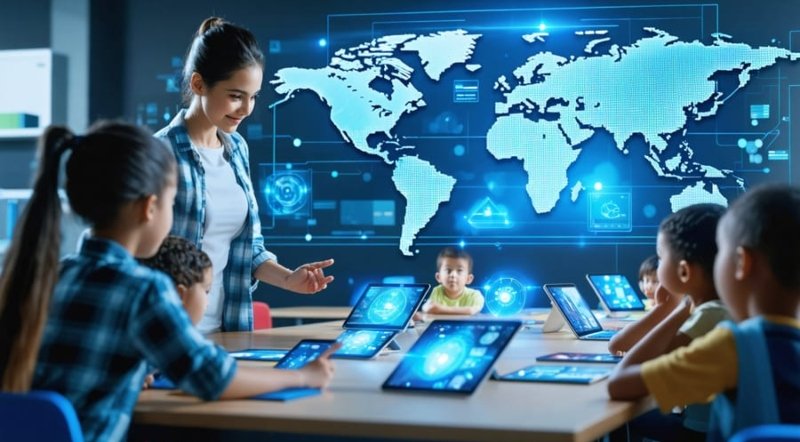
AI is beginning to help address this problem. Many educational platforms now analyze student performance and adjust learning experiences based on individual progress. If a student struggles with certain topics, the system can automatically provide additional exercises, explanations, or recommendations.
This creates a more personalized learning experience. Students no longer need to move through material at exactly the same pace as everyone else. They can spend more time strengthening weaker areas while advancing faster in subjects they understand well.
Teachers also benefit from these tools because AI can reduce repetitive administrative work like grading quizzes, organizing assignments, or tracking progress reports. This allows educators to focus more energy on teaching, mentoring, and supporting students personally rather than spending endless hours on manual tasks.Technology works best in education when it supports human guidance rather than replace it.
Students Now Have Access to More Learning Resources
Another major shift AI created is accessibility. Students today can access educational resources from almost anywhere with an internet connection. AI-powered tools help summarize information, explain difficult concepts, translate languages, and organize study materials more efficiently. Someone learning a new skill no longer depends entirely on traditional classrooms.
A student preparing for exams can use AI-assisted platforms for practice questions and explanations. A designer can learn creative software online through adaptive tutorials. Entrepreneurs can study marketing, finance, or business management from home while running their companies. This flexibility has made education more available to people with different schedules, financial situations, and career goals.
At the same time, students still need critical thinking skills. AI can provide information quickly, but learning how to evaluate, interpret, and apply that information remains deeply important. Access to knowledge is valuable, but understanding how to use knowledge matters even more.
AI Is Changing the Way Businesses Operate
While education adapts to AI, businesses are evolving just as rapidly. Companies today manage enormous amounts of information, communication, customer interactions, and operational processes. AI helps organize and simplify many of these responsibilities.
Customer support systems now answer routine questions automatically. Marketing platforms analyze audience behavior and recommend strategies. Scheduling tools manage appointments and reminders without manual coordination. These changes save time and reduce operational pressure for businesses of all sizes.
Small businesses especially benefit because AI tools often allow smaller teams to handle workloads that once required larger departments. For example, a startup with only a few employees can now automate email marketing, manage customer communication, analyze sales trends, and organize presentations more efficiently than ever before.
Many professionals also use tools that help generate visuals and organize AI slides for meetings, reports, or educational workshops without spending hours designing everything manually. This allows teams to focus more attention on ideas, strategy, and communication rather than repetitive formatting tasks.
Communication Has Become Faster and More Efficient
AI has also transformed communication in both education and business. People now expect faster responses, smoother digital experiences, and more accessible information. AI-powered tools help organizations meet these expectations more consistently. Businesses use automated systems to respond to customer inquiries instantly. Schools use AI platforms to organize announcements, schedules, and student communication more efficiently.
Language barriers are also becoming easier to overcome. AI-powered translation tools allow people from different countries and backgrounds to communicate more naturally than before. This creates more opportunities for collaboration across industries and educational environments. At the same time, communication still needs a human element.
People can usually tell when responses feel overly robotic or disconnected. The most effective organizations use AI to improve efficiency while still maintaining authentic interaction and emotional intelligence. Technology should simplify communication, not remove personality from it entirely.
Creativity and AI Are Learning to Work Together
One of the most interesting misconceptions about AI is the idea that it eliminates creativity. In reality, many people now use AI as a creative support tool rather than a replacement for original thinking.Students use AI to brainstorm essay ideas or organize study notes. Designers experiment with visual concepts more quickly. Business teams generate drafts, outlines, and presentation structures before refining them manually. For example, professionals preparing workshops, educational sessions, or business pitches often use tools that simplify the creation of AI slides to save time while still customizing the final result personally. AI speeds up repetitive parts of creative work, giving people more space to focus on strategy, storytelling, and innovation. Human creativity still remains at the center of meaningful ideas. Technology may accelerate workflows, but originality, emotional understanding, and critical thinking continue to come from people.
Businesses Are Making Smarter Decisions
Data has become one of the most valuable resources in modern business. AI helps companies analyze information more quickly and identify patterns that would take humans far longer to process manually. Businesses can now track customer behavior, predict trends, monitor performance, and identify operational inefficiencies in real time.
This helps organizations make more informed decisions instead of relying entirely on assumptions. For example, retailers can forecast demand more accurately. Marketing teams can measure campaign performance in real time. Schools can identify which learning methods help students most effectively. The ability to analyze information efficiently creates significant advantages for organizations willing to adapt. However, businesses still need judgment and ethical thinking when using AI-generated insights. Data alone cannot replace human understanding.
AI Is Creating New Skills and Career Opportunities
Whenever technology changes industries, job markets evolve alongside it. AI is creating demand for new types of skills in both education and business environments. People increasingly need digital literacy, adaptability, communication skills, and critical thinking abilities to work effectively with AI tools. Students preparing for future careers will likely need to understand how to collaborate with technology rather than fear it entirely. At the same time, soft skills are becoming even more valuable. Creativity, leadership, empathy, and problem-solving remain difficult to automate. The future workforce will probably depend on balancing technical understanding with strong human-centered skills. Businesses already value employees who can combine technology with communication and strategic thinking.
Challenges Still Exist
Of course, AI also raises important concerns. Some educators worry students may rely too heavily on automation instead of developing independent thinking skills. Businesses sometimes struggle with privacy concerns, misinformation, or over-automation that removes human connection from customer experiences.
There are also ethical questions around bias, data usage, and responsible implementation. These concerns are valid and deserve attention. Technology itself is not automatically good or bad. Its impact depends heavily on how people choose to use it. Organizations that implement AI thoughtfully and responsibly are more likely to benefit long-term than those chasing trends without clear purpose.
Conclusion
AI is transforming education and business in ways that are already shaping everyday life. It helps students access personalized learning experiences, allows businesses to automate repetitive tasks, improves communication, and supports faster decision-making across industries. At the same time, these tools are making creativity, organization, and information management more accessible for people with different skill levels and resources. Whether someone is organizing lessons, analyzing business data, creating presentations with AI slides, or managing customer communication, AI is increasingly becoming part of how people work and learn daily.
Still, technology works best when it supports human intelligence rather than replacing it entirely. The future of education and business will likely belong to people and organizations that learn how to combine technology with creativity, empathy, critical thinking, and authentic communication. Because while AI can dramatically improve efficiency, meaningful growth still depends on human ideas, relationships, and purpose. For more details, Click here